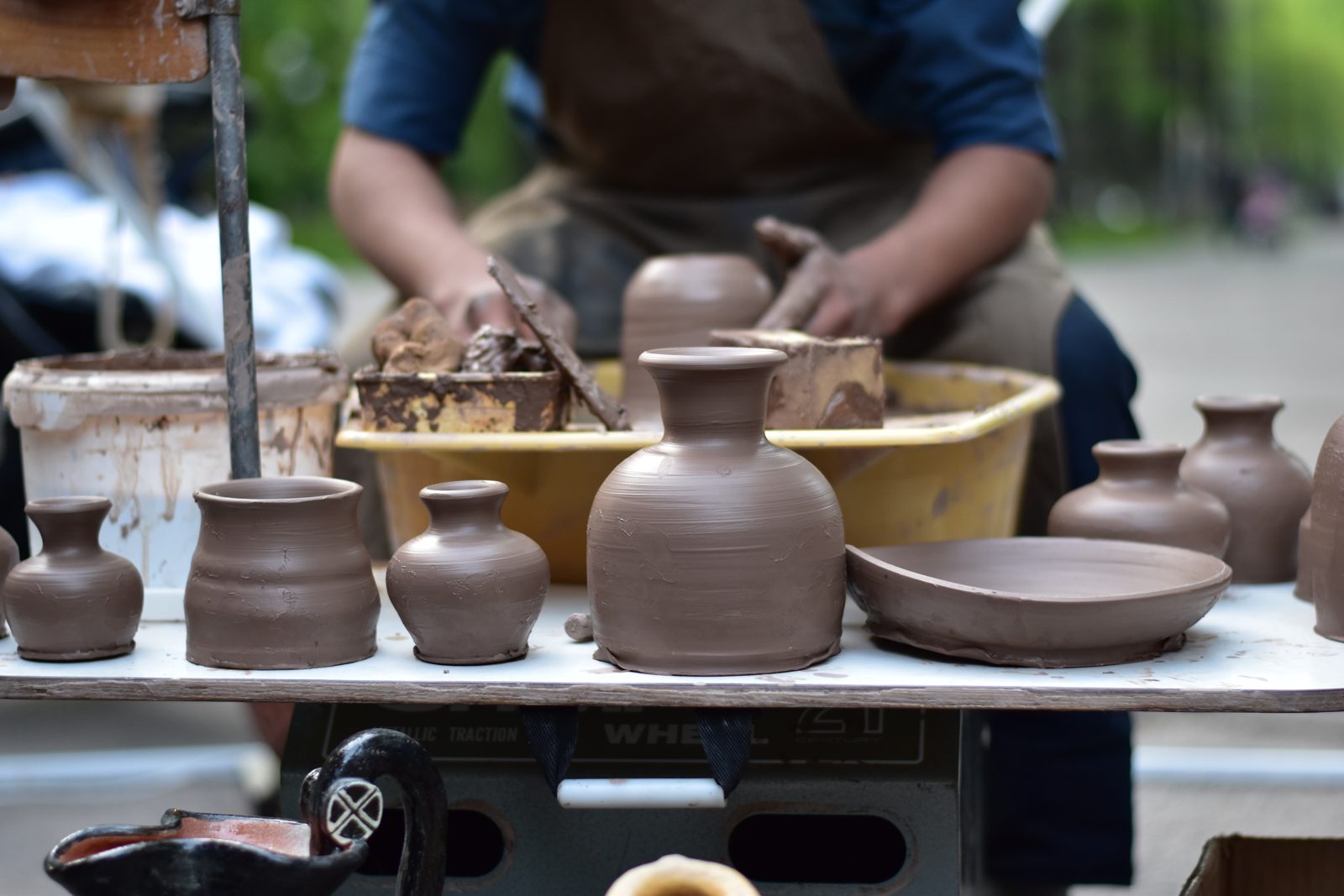
Shigaraki ware
Shigaraki ware is pottery made in Shigaraki, Koka City, Shiga Prefecture. One of Japan’s Six Ancient Kilns, it has been loved by tea masters for the rustic surfaces created by clay and flame — and by everyone else for the tanuki statues that stand outside shops. This pottery, it is said, is a gift of Lake Biwa.
Why pottery grew in Shigaraki
Good clay is the most important thing in pottery, and Shigaraki’s clay is sediment from the bed of ancient Lake Biwa, low in impurities. Clay settled in a freshwater lake has qualities ideal for ceramics, which is why Shigaraki ware can be called a product of Lake Biwa.
Shigaraki lies among hills, and the slopes suited climbing kilns. The surrounding mountains supplied firewood.
From Shigaraki Palace to medieval jars
In 742, in the Nara period, Emperor Shomu built the Shigaraki Palace here. Roof tiles are thought to have been fired nearby, but the kilns have never been found, so the origins of Shigaraki ware remain something of a mystery.
Shigaraki as a medieval kiln is thought to have begun around the 13th century. Like other medieval kilns, it used high-fired unglazed techniques to make jars, storage vessels and mortars for food and water.
Shigaraki and the tea ceremony
A turning point came in the late 15th century, when everyday Shigaraki ware began to be used for the tea ceremony. It was adopted for wabi-cha unusually early among Japanese ceramics.
In the 17th century, multi-chambered climbing kilns were introduced and output grew sharply. From the late 17th century, glazed ware was also mass-produced, and Shigaraki became a maker of everyday vessels again. In the Meiji era, braziers with namako glaze were sold across Japan.
What makes Shigaraki ware distinctive
Shigaraki’s appeal lies in the landscapes created by clay and fire: hiiro, the red glow of iron in the clay; haikaburi, where wood ash melts onto the surface; and scorched areas. Each piece is different.
The clay is good for large forms, so Shigaraki excels at jars, planters, tiles and umbrella stands. Today it makes everything from tableware to lamps and exterior tiles, and the tanuki is one of its best-known faces. Shigaraki ware was designated a Traditional Craft of Japan in 1976.
Shigaraki today
There are about 250 kilns in Shigaraki. Along the kiln walking trail you can see brick chimneys from the days of oil-fired kilns, as well as old wood-fired kilns. The Shiga Museum of Ceramic Art and the Shigaraki Traditional Industry Hall tell the story of Shigaraki ware.
How to choose and care
Shigaraki tableware is prized for its clay texture. Soak pieces in water before use so they absorb less and stain less. Planters and large vessels are sturdy enough for outdoors and gain character with age.
Sources
MAKERS
Makers
FAQ
FAQ
When did the Shigaraki tanuki start?
In the early Showa period, and it spread as a good-luck figure.
Is there Shigaraki tableware?
Yes — plates, bowls and mugs that show the texture of the clay.
Is Shigaraki ware an official traditional craft?
Yes, designated in 1975.