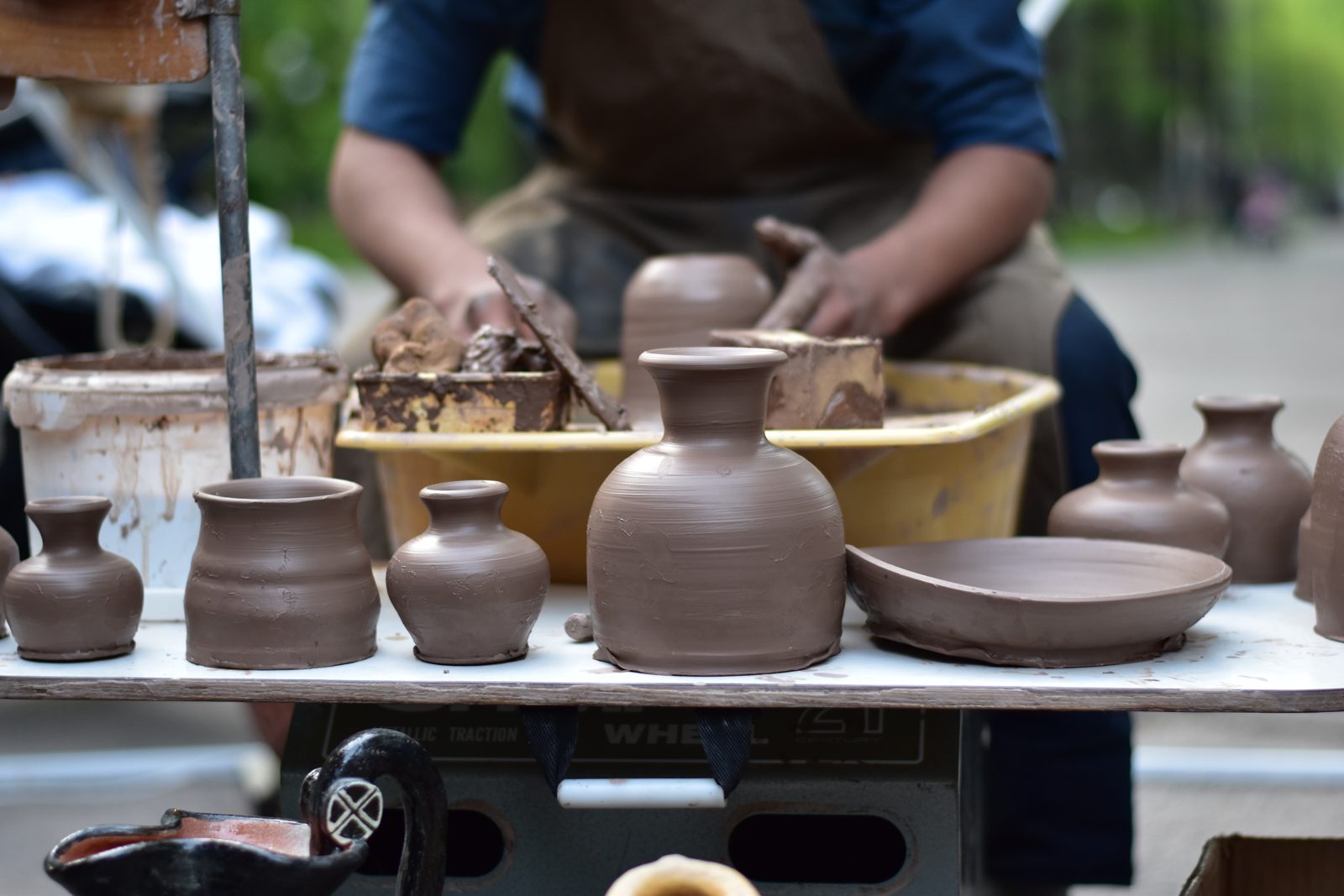
Mashiko ware
Mashiko ware is pottery made in Mashiko, Tochigi Prefecture. Its thick, generous shapes and warm, earthy colours make it a favourite for everyday tableware. As a production centre it is young, dating only from the end of the Edo period — and it was one potter’s move to the town that made Mashiko known around the world.
Why pottery began in Mashiko
Old kiln sites show that pottery was made in Mashiko as far back as the Kofun or Heian period. But the Mashiko ware of today began in 1853, when Otsuka Keisaburo built a kiln here.
Otsuka had trained in pottery in neighbouring Kasama, in Ibaraki, and brought those skills home. Mashiko and Kasama are still called “sibling production areas”.
Everyday goods for Tokyo’s kitchens
In the Meiji era, Kasama and Mashiko each formed associations, standardised their products and grew together as the pottery centre of the Kanto region. From the Meiji to the Taisho era they made jars, water pots, mortars and earthenware pots in quantity. Sturdy, practical and cheap, they sold across eastern Japan, especially in Tokyo. Mashiko began as a maker of everyday tools.
Hamada Shoji and the mingei movement
The potter who transformed Mashiko was Hamada Shoji. In 1924 he built a kiln in Mashiko and, with Yanagi Soetsu, led the mingei (folk craft) movement, which found beauty in everyday things made by anonymous craftsmen.
Through his work, Hamada raised Mashiko ware from simple household goods to celebrated folk craft, and trained many potters. His connection with the British potter Bernard Leach spread Mashiko’s name abroad. Even as plastics and metal replaced everyday pottery from around the 1950s, the popularity of mingei kept Mashiko going. Hamada was later named a Living National Treasure.
What makes Mashiko ware distinctive
Mashiko ware is thick pottery that makes the most of the local clay. Techniques such as trailing lines of slip across wheel-thrown pieces create its signature patterns, and calm glazes such as persimmon, black and rice-husk white are common.
It is also open: there is no strict rule for what Mashiko ware must look like. Potters have moved here from all over Japan, each with their own style, so you can find everything from traditional to contemporary pieces.
Mashiko today
Pottery fairs in spring and autumn draw large crowds. Hamada’s former home and workshop are open to the public as the Mashiko Sankokan Museum. In 2020, together with Kasama, the area was recognised as Japan Heritage under the title “Kasamashiko”.
How to choose and care
Thick and sturdy, Mashiko ware suits rice bowls, serving bowls and mugs you use every day. Pottery absorbs water, so soak new pieces for a while before first use to help prevent stains, and dry them well before putting them away.
Sources
MAKERS
Makers
FAQ
FAQ
When is the Mashiko pottery fair?
Every spring (Golden Week, early May) and autumn (around November).
Who was Shoji Hamada?
A potter who opened a kiln in Mashiko and was a central figure in the mingei movement.
Is Mashiko ware an official traditional craft?
Yes, designated in 1979.